How to Coordinate a Multi-Car Road Trip
To coordinate a multi-car road trip, sort four things before you leave: assign a lead car and a sweep car, share one route with regroup stops set every 45–60 minutes, agree on one way to communicate, and put every car on one shared live map. Get those four settled in the driveway and the drive itself mostly runs itself — the planning is where multi-car trips are won or lost, not the highway.
The short version
- Roles first — a lead to set the pace, a sweep to watch the back.
- One shared route — same stops, regroup points every 45–60 minutes.
- One comms channel — glanceable, hands-free, with an emergency option.
- One live map — every car visible in real time, no “where are you?” texts.
We built Vamio after one too many trips where half the group ended up at the wrong exit, so this is the checklist we wish we’d had.
How do you plan a multi-car road trip?
Plan it in three layers: people, route, and fallback. Decide who plays which role, agree on the route and stops everyone follows, and settle what happens when a car gets separated or breaks down. Most groups plan only the route and improvise the rest — which is why they fall apart at the first missed exit. Spend twenty minutes on roles and contingencies before departure and you remove the two things that actually split a convoy: confusion about who’s leading and panic when someone drops out of sight.
Assign roles before you leave
Give the trip two fixed roles. The lead car sets the route and the pace and never speeds up to drop the back of the group. The sweep car drives last and flags when the group is strung out too far. With those two roles locked, every car in the middle only has to keep the vehicle ahead in sight — a far simpler job than tracking the whole group. If you’ve got a big group, add a navigator in the lead car so the driver never touches a phone. This is how organized convoys and overlanding crews have run for decades: clear roles hold the group together even when technology doesn’t.
Build one route everyone shares
Everyone drives the same route with the same stops — decided in advance, not negotiated over the radio at 70 mph. Pick a regroup point roughly every 45–60 minutes: a specific gas station or rest area, named ahead of time. Share the full route and stop list with every driver, so a car that falls behind always knows the next place the group will be. Clear stops turn a separation from a crisis into a non-event — the car that got cut off simply continues to the agreed point and waits.
Agree on how you’ll communicate
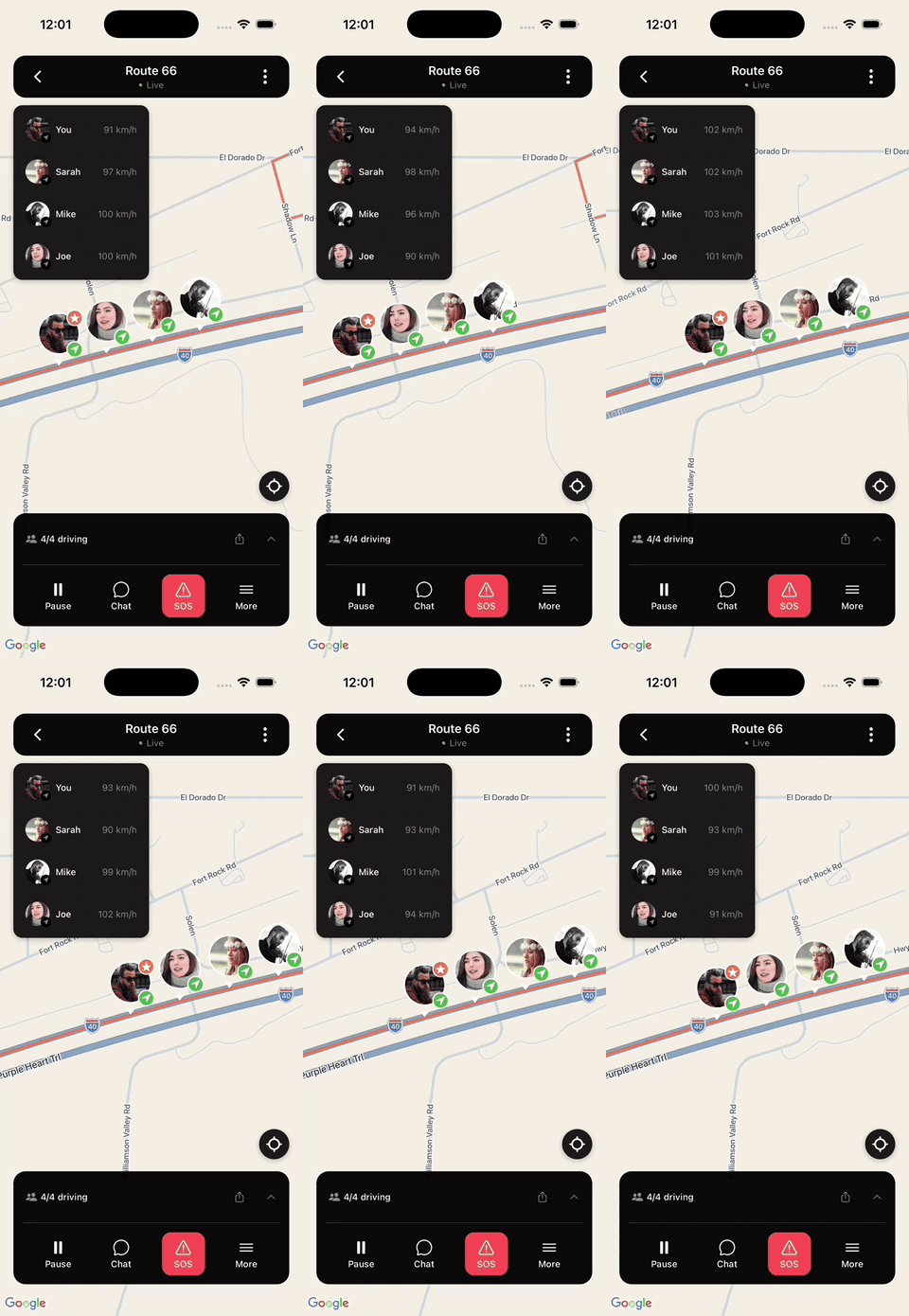
Pick one communication method and keep it hands-free. Anything a driver has to read or type is a hazard — the U.S. National Highway Traffic Safety Administration notes that the five seconds a text takes is, at 55 mph, like driving the length of a football field with your eyes closed (NHTSA). So keep it to quick, glanceable signals: a shared map, one-tap status messages (“pulling over,” “need gas”), and a real emergency channel. Group-driving apps like Vamio bundle these into one place — in-drive chat plus a one-tap SOS that alerts everyone with your exact location (more on how we handle safety).
Put every car on one live map
The habit that ties the other three together is a single shared live map. Instead of texting positions back and forth, each driver glances at a map and sees every car move in real time. Apps like Vamio do exactly this: the whole group joins one “drive,” everyone appears on the same map, and a typical hour-long drive uses only about 5–10 MB of data. Location is shared only during the active drive and stops when it ends — coordination on the road without anyone being tracked the rest of the trip. (For the in-the-moment tactics once you’re rolling, see our guide on how to keep a group together on a road trip.)
Plan for what goes wrong
Three things reliably go sideways: a car gets separated, a car breaks down, or the group drives at different speeds. Handle each in advance. Separated: everyone continues to the next agreed stop and waits — no doubling back. Breakdown: the sweep car stays with it; the lead decides whether the group waits or regroups ahead. Different paces: the lead drives to the slowest comfortable car, not the fastest. Naming these rules before departure is what keeps one hiccup from unraveling the whole trip.
How many cars is too many?
You can coordinate anything from a 3-car crew to a large caravan, but keep each map manageable. On Vamio’s free plan, a single drive holds up to 20 people on one live map; for a bigger event, split into multiple drives and pair up the leads. A tight group of 20 that all see each other travels far better than 50 cars scattered across ten miles of highway. If you’re scaling up, the answer is structure — several coordinated drives in parallel — not one overloaded map.
Multi-car road trip planning checklist
Settle these before you pull out:
- Lead and sweep assigned — pace-setter up front, last car watching the back.
- One route shared, with regroup points every 45–60 minutes.
- One comms method agreed — hands-free, with an emergency option.
- Everyone on the same live map — invite link sent, all cars showing.
- Fallback rules set — what to do if separated, broken down, or split by pace.
Coordinate your next road trip with Vamio
Vamio is a free group-driving app for road trips and convoys on iOS 16+ and Android 10+. Start a drive, share one invite link — no sign-up required for your crew to join — and everyone stays on one live map from departure to destination. Download Vamio and coordinate your next trip the easy way.
